AI and Cybersecurity:a Powerful Duo Against Evolving Threats
Today’s digital world is rapidly evolving, and with the constant increase in access to media are reinventing new methods to exploit vulnerabilities including scams, frauds and breaches.

Today’s digital world is rapidly evolving, and with the constant increase in access to media are reinventing new methods to exploit vulnerabilities including scams, frauds and breaches.

What if you could rocket from Earth, not to the Moon or Mars, but down a wormhole that loops all the way across the vast Milky Way, slashing travel time down to mere minutes? Science fiction, you say? Well, with our abilities to journey to the far reaches of the cosmos still in their infancy, it can’t hurt to dream big.

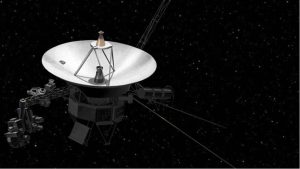
If you go outdoors on a clear evening and also search for it, you might have the ability to see Jupiter beaming brilliantly amongst the celebrities. At the exact same minute, over 14.5 billion miles away and not a likely leader is still difficult at the workplace examining the gap much past our planetary system. That leader is the Voyager 1 spacecraft, and also it stays one of the most far-off human-made things from Planet after over 45 years of worldly traveling.

Stars, the dazzling points of light that fill up the evening skies are the foundation of galaxies plus the cradles of life itself. From their birth in large clouds of gas as well as dirt to their ultimate death, stars undergo an intriguing and also intricate life cycle.

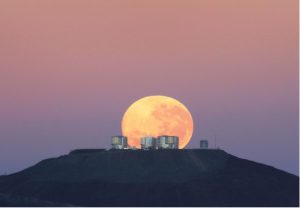
In the mission to recognize deep space mankind has actually developed progressively effective devices to observe deep space. Completion of this venture is the Extremely Large Telescope (ELT) which is readied to be the largest optical/near-infrared telescope on the planet.

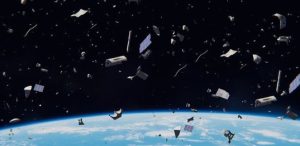
Space debris, also known as space junk, refers to the defunct artificial objects orbiting Earth. These objects include decommissioned satellites, spent rocket stages, and fragments from collisions and explosions.

The search for exoplanets– planets that orbit stars outside our planetary system– has actually quickly developed into one of the most interesting and dynamic fields of astronomy

Gravitational waves stand out as a remarkable finding in today’s universe explorations. Over a century ago Albert Einstein predicted that these waves exist in the fabric of space-time. By generating insights into the most dynamic and energetic cosmic events like black hole and neutron star mergers exist gravitational waves. We will examine gravitational waves in this piece examining their occurrence and modifying our comprehension of the cosmos.

In the large stretch of deep space galaxies– substantial systems of celebrities, gas, dirt, as well as dark matters– are the essential foundation. While noticeable matters such as celebrities as well as earths, creates the glowing core of these galaxies, a strange compound called dark matter plays an equally critical function in their formation together with formation.

Time dilation is among the most interesting as well as astonishing principles in contemporary physics testing our day-to-day experience of time.

The 21st century has witnessed an explosion of scientific advancements and discoveries that have reshaped our understanding of the world and the universe. Behind these breakthroughs are brilliant minds whose work has significantly impacted various fields, from genetics and biology to computer science and medicine. Here, we explore the contributions, achievements, and life stories of some of the most influential scientists of the 21st century.

Astronomy, the research study of deep space, has long been an area that astounds both experts as well as beginners alike. From old people who stared at the stars with marvel to today’s readily progressed observatories, our mission to recognize deep space has continued to be a deeply human venture.

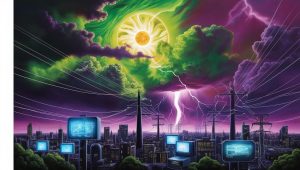
Solar flares are powerful bursts of radiation from the Sun, which have the potential to cause significant disruptions to Earth’s technological systems. These explosive events, originating from sunspots and active regions on the Sun’s surface, can have far-reaching consequences for satellite communications, power grids, navigation systems, and even astronaut safety. As we become more dependent on technology in our daily lives, understanding the nature of solar flares and their impact on Earth’s infrastructure has become increasingly important.

Space travel, once a dream reserved for science fiction, is becoming a rapidly evolving field, fueled by breakthroughs in technology, a growing interest in commercial space ventures, and humanity’s desire to explore beyond Earth. From space tourism to interplanetary exploration, the future of space travel promises to revolutionize how we interact with the cosmos. However, significant technological, financial, and logistical challenges must be addressed to make this future a reality. In this article, we will explore the current state of space travel, emerging technologies, and the challenges that must be overcome to ensure the success of future missions.


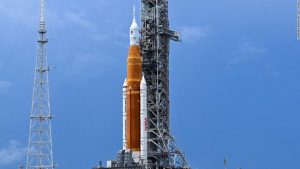
The Artemis is currently an exciting project by NASA that seeks to place humans on the lunar surface for the second time but sustainably. It was thus christened Artemis after the Greek goddess of the moon and the twin sister of Apollo, the project is expected to redefine human capacities and technological advancement, and global collaboration.

The Universe, huge and also mystical, has actually gone through a remarkable trip given that its beginning almost 13.8 billion years back. From the eruptive minute of the Big Bang to the growth of galaxies, stars as well as earths the cosmos’s development is a tale of planetary development, change as well as intricacy. As researchers remain to piece this story making use of sophisticated telescopes satellites plus academic versions, our understanding of the universe’s past present as well as future expands. This write-up discovers the crucial phases in the world’s advancement starting with the Big Bang coupled with causing today.
Write to
Jasmine Gogoi at [email protected]
Let’s develop our society with a scientific heart. Join us to build the scientifically nurtured future →