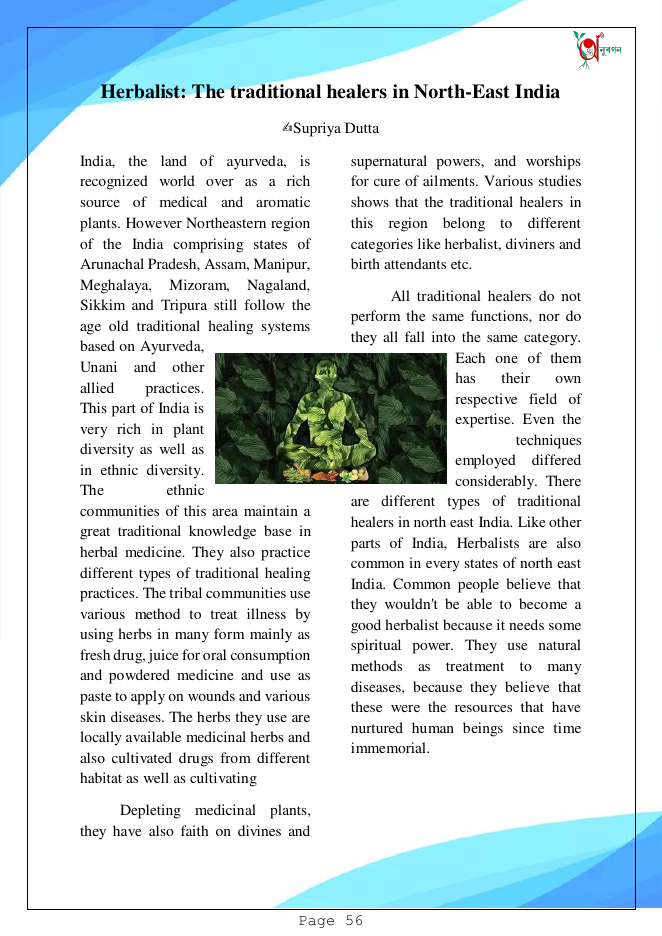
Traditional healing practices in the eight north-eastern states of India, where ethnic communities rely on Ayurveda, Unani and locally gathered herbs, are the subject of this piece. Healers fall into categories such as herbalists, diviners and birth attendants, each with a distinct field of expertise, and their knowledge is passed down from experienced healers over generations. Herbalists prepare fresh juices, powders and pastes from wild or garden-grown plants, prescribing them mainly for malaria, jaundice and menstrual problems while avoiding oral medicines for fractures and severe illnesses; species such as Mishimi teeta, Manimuni, Sarpagandha and Agar are named.
Interest among the younger generation is declining because of modernisation and poor financial returns, and many healers depend on other jobs or now buy raw materials from the market. The author argues that this unorganised system, still mixed with superstition and religious belief, needs scientific validation and formal recognition, and points to the region's plant diversity (about 50 per cent of India's total) and the work of the TERI North East Centre as a basis for a medicinal-plant economy.