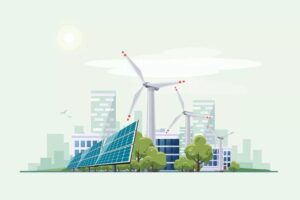
The world’s energy system stands at a crossroads, on the eve of a new stage in its evolution. Using fossil fuels is undoubtedly harmful to the environment, and shifting energy generation to more sustainable sources is absolutely necessary. One attractive solution is the shared ownership of renewable energy plants, which puts power in the hands of ordinary people and brings community energy cooperatives into focus.
What are community renewable energy projects?
Community renewable energy projects (CREPs) are local schemes in which communities develop and oversee projects that supply cleaner forms of energy for their area. They can take many forms, from photovoltaic systems installed on the rooftops of community buildings to shared wind turbines. What sets them apart is that the community possesses the microgrid through ownership, runs the microgrid itself and, most importantly, reaps the benefits that come from generating clean energy.
A step-by-step guide to starting a CREP
Setting out to build a CREP can be enlightening and liberating, but it has to be deliberate and collaborative. Here is a roadmap to get you started:
Identify a dedicated group. Begin by bringing together a group of people who will champion the cause of renewable energy. This group can get in touch with bodies such as the environmental agency and other environmental organisations, and with anyone who has an interest in energy costs or environmental concerns.
Feasibility study. Assess how viable the different renewable energy sources are in the context of your community. For possible sites, consider the amount of direct sunlight for solar plants, the wind flow for wind turbines, and the open ground or roof space available for installations.
Community outreach and education. Educating and sensitising residents and stakeholders is paramount. Use awareness-raising sessions such as public forums, information-sharing sessions and educational events to tell residents about CREPs, why the programs are worth embracing and how they can get involved.
Develop a business model. Work out the project’s funding gap. The model may involve cooperative ownership, in which members share the costs and the profits, or a limited liability company structure with community investment stakes.
Secure funding. Your CREP can be financed partly or fully through several routes: government departments, renewable energy organisations, and even crowdfunding platforms and services.
Legal and regulatory considerations. Identify, understand and successfully manage the legal requirements, rules and guidelines that apply. These include permits, connection to the local utility grid, and compliance with the area’s zoning regulations.
Project management and maintenance. Draw up a sound project management plan that covers the construction and installation of the renewable energy system and its current and future maintenance.
Long-term sustainability. Revisit the original ambitious goals and plan for the long term. Design the project’s organisation and management framework, identify the key people who will be responsible for each part of the project, and make provision for recurring costs and future upgrades.
Advantages of community renewable energy projects
CREPs offer many advantages for communities, the environment and even the local economy:
Reduced energy costs. Communities that generate their own power can reduce their dependence on conventional utilities and, in turn, bring down their total bills.
Environmental impact. Harnessing energy from the sun and wind, which have the least impact in terms of greenhouse gases, plays a crucial role in slowing climate change and cutting unhealthy air.
Energy independence. These programs help communities reduce their dependence on external sources of energy.
Economic benefits. Renewable energy projects create local jobs in installation, maintenance and, potentially, the manufacture of renewable energy products.
Community building. CREPs generate community spirit and a sense of ownership, creating bonds that help environmental projects succeed.
Challenges and considerations
While CREPs offer a promising path, they are not without challenges:
Initial investment. Renewable energy systems are known to be capital-intensive up front, and this may call for creativity in funding.
Navigating regulations. Implementing a renewable energy project can involve legal and regulatory hurdles, particularly in obtaining permits and interconnection agreements.
Project management. Any CREP needs strong project management to be implemented and sustained.
Community consensus. Having the community behind the cause is very important. Taking time to build rapport, set up channels of communication and address people’s apprehensions is key to developing a project successfully.
Conclusion
People-centred renewable energy can provide a viable solution for the future, anywhere in the world. Through cooperation and the involvement of communities, people can gain independent sources of power, create job opportunities and minimise harm to the environment. Despite the risks identified, there are clear advantages to be gained from CREPs. As this guide has shown, it is possible to plan, involve the community and finance a CREP so that communities can take ownership of the cause of sustainable energy.
There is a wide range of resources to help with the decisions along the way. Professional environmental organisations, non-governmental organisations that advocate renewable energy, and government departments and agencies can all be of great assistance. Be part of the change towards a sustainable future, starting with one community and one renewable project at a time.